
Treasury Board Secretariat
Designing a Performance-Based Regulatory Architecture
The Challenge
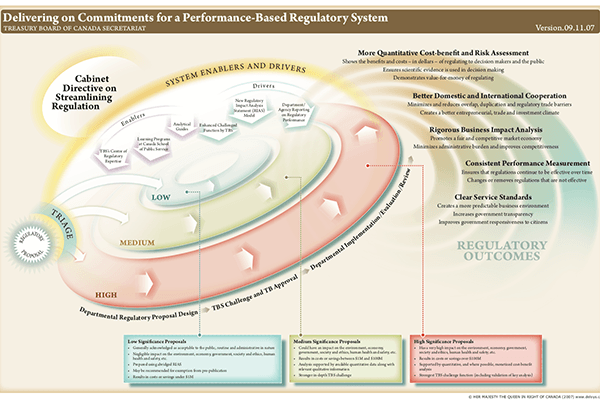
A policy team needed a performance-based regulatory model that could apply consistently across diverse regulated sectors — from food safety to financial services. Existing frameworks were compliance-oriented: they measured whether rules were followed, not whether regulations were achieving their intended outcomes. The team needed an architecture that could measure outcomes at scale without creating an impossible reporting burden.
The Approach
Framework Analysis
Reviewed 12 existing regulatory performance models from Canadian federal and provincial governments, plus OECD and US regulatory frameworks. Identified the structural gap between compliance metrics and outcome metrics.
Architecture Design
Designed a tiered performance measurement architecture using logic model methodology. Three tiers: immediate outputs, intermediate outcomes, and long-term regulatory impact. Each tier with defined indicator types and data source requirements.
Self-Assessment Tool
Built a self-assessment tool embedded in the model — allowing regulated entities to assess their own performance against the outcome indicators without requiring external audits for routine reporting.
Sector Testing & Refinement
Tested the model against three regulated sectors: food safety, consumer product safety, and telecommunications. Refined the indicator language and tier definitions based on applicability testing.
3
Directorates adopted the model as reference architecture
Outcomes
- Model adopted as reference architecture for regulatory modernization across three directorates
- Self-assessment tool embedded in the model reduced external audit requirements for routine performance reporting
- Tiered architecture successfully mapped outcomes across three distinct regulated sectors
- Framework cited in subsequent Treasury Board guidance on regulatory performance measurement
Engagement
Related Work
Treasury Board
Performance-Based Regulatory Model
Performance Design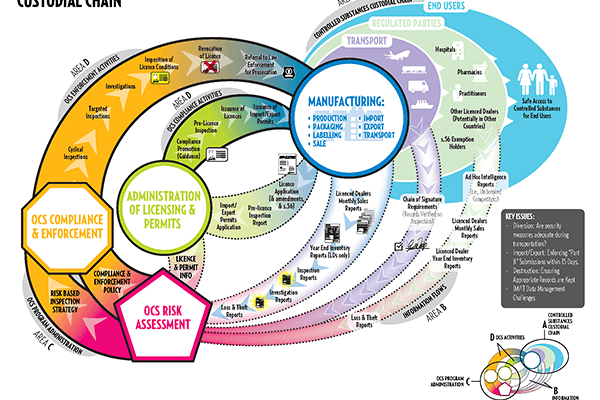
OCS
Logic Model & Performance Framework
Performance Design
Elections Canada
Performance Design Spotlight
Performance Design