
Health Canada
Building a 10-Year Portfolio Foresight for a Regulatory Program
The Challenge
A regulatory program portfolio had grown organically over 20 years. Programs had been added, modified, and layered without a coordinated strategy — producing significant interdependencies that no one had mapped. Senior leadership needed to understand what the portfolio would need to look like in 10 years to remain effective, and what decisions to make today to get there.
The Approach
Stakeholder Engagement
Facilitated 18 structured interviews and 4 cross-branch workshops with program managers, policy leads, and regulatory scientists. Surfaced the informal knowledge that never appears in org charts.
Systems Modelling
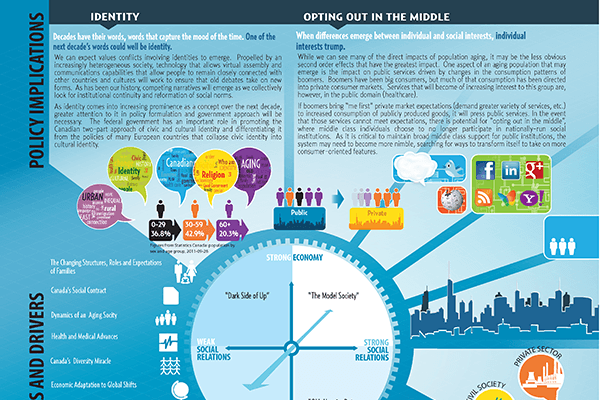
Built a qualitative systems model mapping program interdependencies, shared resource dependencies, and external driver pressures. The model made visible what people had sensed but couldn't articulate.
Scenario Development
Developed three distinct future-state scenarios for the portfolio based on different combinations of policy direction, resource reality, and regulatory environment. Each scenario came with a strategic implication map.
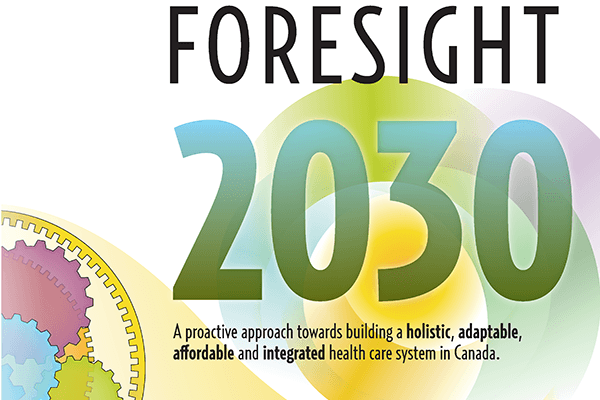
Foresight Report & Decision Framework
Synthesized findings into a foresight report with a decision framework that mapped near-term decisions to long-term portfolio consequences. Designed to support the department's upcoming budget cycle.
3
Future-state scenarios with strategic implication maps
Outcomes
- Portfolio review led to restructuring of two program streams previously identified as redundant
- Systems model used as the decision framework for a major budget allocation process
- Foresight report adopted as a reference document for departmental planning cycles
- Cross-branch relationships strengthened through facilitated engagement process
Engagement
Related Work
HRSDC
Environmental Foresight Analysis
Foresight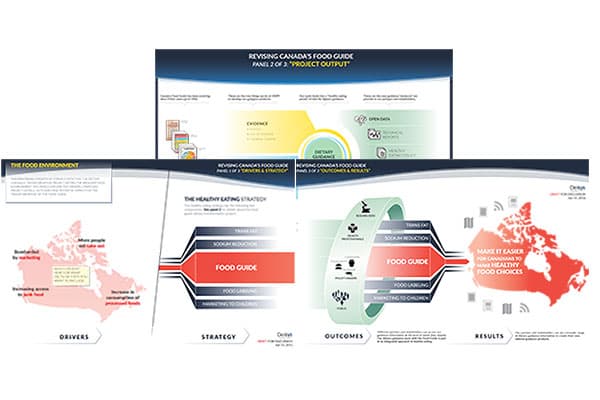
Health Canada
Food Guide — Program Architecture
Program Architecture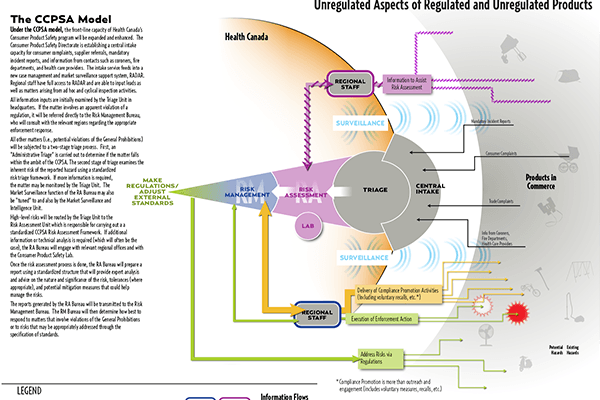
HECSB
Hazardous Products Act — Logic Model
Program Architecture